 LoreRoad
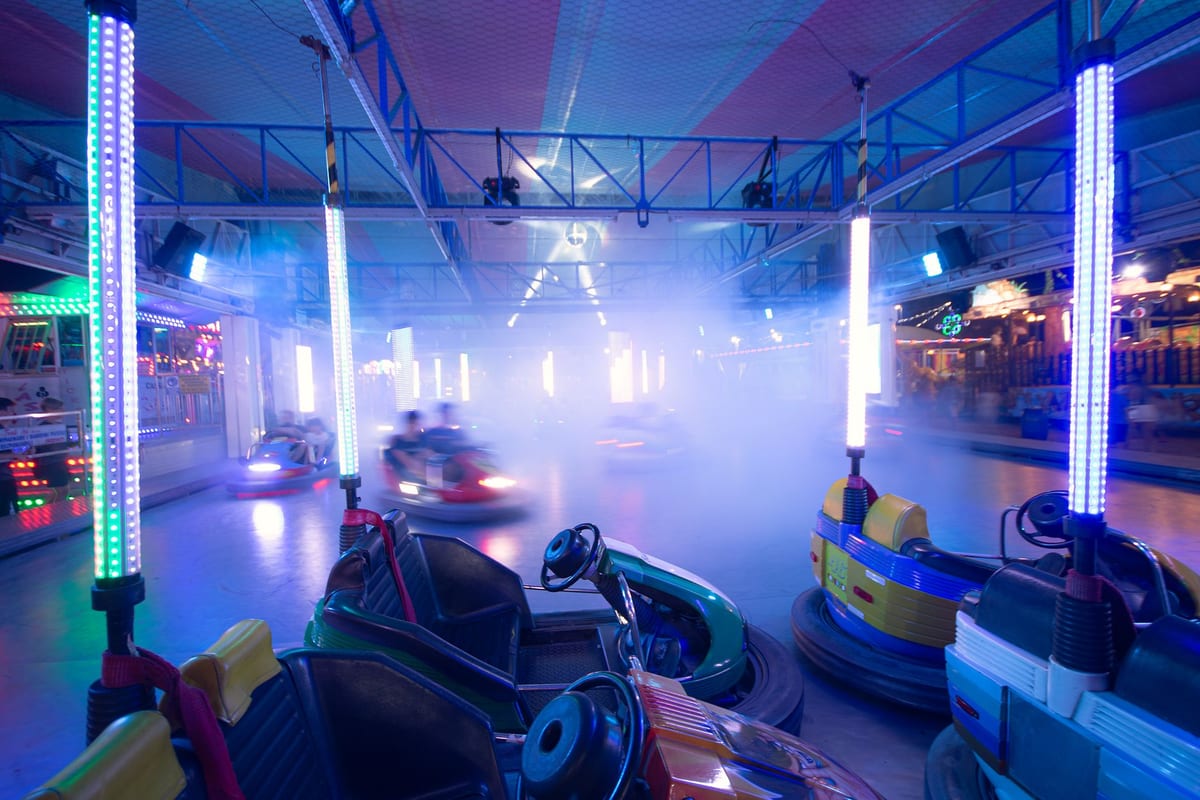 Photo by Paolo Motti · CC Pexels License undefined
Two-hour 'local legends' night drive: a scripted Lore telling session
A ready-to-run, two-hour night-drive script that mixes strange local legends by state, tight pacing, and voice-only car games—driver-first and spooky-fun.
You’ve got two hours, a full tank, and a car full of skeptics. Let’s make it sing.
Everyone’s buckled, snacks are open, and you promised “a spooky little loop.” The trick: keep the driver relaxed, the backseat engaged, and the stories crisp enough that no one reaches for their phone.
This guide gives you a reusable, clocked script for a two-hour evening drive built around strange local legends by state, with voice-only car games and natural breathers. It’s tuned for pacing and night-driving safety.
The pacing that keeps listeners leaning in, not tuning out
Think in acts, not a single monologue. Narrative research shows audiences track well in 20–30 minute arcs; use that as your macro-structure for a two-hour program (PMC study on narrative acts). Inside each act, alternate a longer legend with short beats so people can digest. Storytelling guides also recommend mixing snappy pieces between longer ones, and actually timing your plan (storytelling practice outline).
- Act length: 20–30 minutes each (4–5 acts for two hours).
- Long legend: 8–12 minutes.
- Short vignette: 3–5 minutes.
- Game break: 5–10 minutes per round for classics like 20 Questions or I Spy keeps energy high without fatigue (Richmond Mom car games).
- Breathing room: 60–90 seconds of road-only quiet after each story.
Voice and sound design settings that set the mood without masking the road
We want eerie, not unsafe.
- Narration speed: aim around 150 words per minute. It’s the sweet spot for comprehension in voiceover and reduces “what did they say?” repeats (StudyGuides on narration rate). If you’re using Lore (LoreRoad’s AI guide), ask it to “keep it around 150 words a minute.”
- Volume discipline: keep narration a notch under your typical podcast level so horns and sirens punch through.
- No dense beds: skip continuous drones or heavy music under narration; save stingers for intros/outros only. Constant masking raises risk of missing cues at night.
- Voice-only control: NHTSA and US DOT guidance pushes minimizing visual-manual tasks in vehicles and using voice where possible (NHTSA distracted driving; US DOT guidelines). With LoreRoad, ask by voice and let Lore answer out loud. Meet the voice here: Lore.
Keep the driver safe while you’re telling ghost stories
Night driving stacks risk: lower visibility, fatigue, and age-related vision differences. NHTSA materials note a 50-year-old may need about twice as much light as a 20-year-old to see the same detail at night (NHTSA technical note). Build the plan around that reality.
- Driver-first rules: no screen glances, no tapping through menus, no manually skipping segments. Use voice-only starts and stops. NHTSA defines distracted driving to include visual, manual, and cognitive load; reduce all three (NHTSA distracted driving).
- Conservative speed and spacing at night; give more margin before intersections and wildlife zones (that extra margin is your safety buffer while listening).
- One person is the “controls captain” (front passenger). Their job: handle volume nudges and start/stop cues so the driver doesn’t.
- Keep story choices simple. Avoid forcing the driver to make decisions during narration. If you’re polling the car, do it in game breaks, not mid-ghost.
- Schedule quiet. Build 60–90 seconds of road-only silence after each legend. Cognitive “unload” matters; even voice interactions carry load comparable to a hands-free call baseline if not designed carefully (arXiv study on in-vehicle agents).
How to plan a two-hour night drive of local legends without boring anyone
You’re mixing strange local legends by state with brisk games and short vignettes. To keep it fresh:
- Vary the flavor: urban myth, roadside oddity, historical mystery, cryptid report. Location-aware content helps diversify fast; see how Facts trigger as you pass.
- Use geography as your pacing tool: as the road shifts from town to country, swap from a denser, chatty legend to a spare, eerie piece.
- Cap any single uninterrupted narration at ~12 minutes. If a legend is longer, split it into two parts with a 90-second drive-only interstitial.
- Interleave quick wins: a 4-minute “state oddity” or historic vignette resets attention without torpedoing your mood arc.
- Keep games compact. Round length in the 5–10 minute band has wide family approval for car play and prevents drag (Richmond Mom car games). LoreRoad’s Games library has voice-friendly classics like License Plate Hunt, 20 Questions, Road-Sign Bingo, and The Impostor.
Your reusable two-hour script and timeline
This is a driver-first, voice-controlled outline. Use it as-is or swap in legends closer to your route. The structure clings to 20–30 minute acts (narrative act guidance) and steady narration rate (~150 wpm, StudyGuides).
0:00 — 0:03 Setup and safety check
- Front passenger (controls captain) pairs phone to car audio, sets volume to a click under normal podcast level. Driver confirms hands-free and seat/visibility set.
- Voice prompt to Lore: “Lore, tonight’s theme is strange local legends by state. Keep your narration around 150 words a minute. Start with a short mood-setter.”
0:03 — 0:06 Cold open vignette (3 minutes)
- A quick, eerie state oddity to set tone.
- 60-second road-only quiet.
0:07 — 0:17 Act 1 long legend (10 minutes)
- Choose a gripping state legend tied to a landmark you’ll pass soon. Let Lore introduce one creepy sensory detail at a time, not all at once.
- 90-second quiet.
0:19 — 0:26 Game break: 20 Questions (7 minutes)
- One round only; driver participates by voice. Controls captain tracks guesses. Keep your theme “cryptids and curios.” 5–10 minutes fits attention well (Richmond Mom).
0:26 — 0:31 Short historic vignette (5 minutes)
- Pivot from supernatural to a verified roadside mystery near you. Contrast keeps ears fresh (story pacing guide).
- 60-second quiet.
0:32 — 0:44 Act 2 long legend (12 minutes)
- Pick a different state or an adjacent region for variety. If you have a rural stretch here, lean into atmospheric pauses.
- 90-second quiet.
0:46 — 0:53 Game break: The Impostor (7 minutes)
- Three rapid tales: two real local oddities, one fake. Passengers vote by voice. Reveal. One round only.
0:53 — 0:56 Micro-oddities (3 minutes)
- Two bite-size “did-you-know” hauntlets. Keep them 60–90 seconds each.
- 60-second quiet.
0:57 — 1:10 Act 3 anchor legend (13 minutes)
- Your centerpiece. Split into two beats at minute 7 for one breath of silence, then the twist.
- 90-second quiet.
1:12 — 1:19 Game break: I Spy (night edition) (7 minutes)
- Only items visible within headlights or dashboard icons. One round. Keep it mellow so the driver’s scan stays natural. Short is key (Richmond Mom).
1:19 — 1:24 State-by-state sampler (5 minutes)
- Three ultra-short “postcard” legends from different states you haven’t touched yet.
- 60-second quiet.
1:25 — 1:35 Act 4 long legend (10 minutes)
- Change texture: from ghostly to quirky (e.g., a bizarre roadside artifact with disputed origins). Stick to ~150 wpm cadence (StudyGuides).
- 90-second quiet.
1:37 — 1:44 Game break: Road-Sign Bingo (7 minutes)
- Controls captain calls targets. One board, shared verbally. Stop after first bingo.
1:44 — 1:48 Calm interstitial (4 minutes)
- Instrumental sting open, then light ambience only. No narration. Hydrate, breathe, do a mirror and speed check.
1:48 — 1:56 Finale legend (8 minutes)
- Short and punchy with a crisp button. End with a knowing wink rather than a lecture.
- 60-second quiet.
1:57 — 2:00 Wind-down and arrival
- One last micro-oddity or “where it likely came from” debunk. Soft outro music sting and home.
Tip: If your route passes known landmarks, let LoreRoad’s Facts chime in as you drive; location-aware stories read aloud keep the driver’s eyes on the road.
How long should each story be?
Use these caps:
- Anchor legends: 10–13 minutes max. If you need longer, split with a quiet beat.
- Supporting legends: 8–10 minutes.
- Vignettes: 3–5 minutes.
- Micro-oddities: 60–90 seconds.
Those lengths fit neatly into 20–30 minute acts (narrative act research) and keep your narration rate near ~150 wpm for clarity (StudyGuides).
Picking and cueing legends by state without touching the screen
- Preload your set before you start rolling. The controls captain builds a simple queue and labels each item with a timestamp target.
- Use voice prompts: “Lore, give us a five-minute legend from [state], eerie tone,” or “Lore, three micro-oddities from different states, 90 seconds each.” Lore answers out loud, so the driver keeps their eyes on the road.
- If the car is quiet or the driver asks for a breather, say: “Lore, pause after this sentence.” That keeps cognitive demand low and matches NHTSA’s voice-first guidance (US DOT guidelines).
Interstitial games that won’t hijack the driver
Keep all games voice-only and time-boxed. Guidance for family car games favors 5–10 minute rounds for sustained engagement (Richmond Mom). Easy picks already in LoreRoad’s library:
- 20 Questions — “Cryptid or not?”
- The Impostor — Two real oddities, one fake.
- Road-Sign Bingo — Caller-only, shared board out loud.
- I Spy (night rules) — Only what’s in the driver’s natural scan.
If you’ve got a full crew, share the fun without passing the driver’s phone. Multiplayer Party Mode lets everyone join on their own phones using a short code, while the driver stays hands-free.
Quick checklist for a safer night-drive session
- Driver has zero visual-manual tasks. Voice-only interactions align with NHTSA guidance on minimizing in-vehicle distraction (NHTSA distracted driving; US DOT guidelines).
- Volume leaves headroom for sirens/horns; no constant music beds.
- Acts planned at 20–30 minutes with pauses (PMC narrative acts).
- Narration held near 150 wpm (StudyGuides).
- Game rounds 5–10 minutes (Richmond Mom).
- Extra caution if anyone in the car is a night-vision-challenged driver; a 50-year-old typically needs more light than a 20-year-old at night (NHTSA technical note).
Does LoreRoad actually fit this use case?
LoreRoad reads location-aware facts, landmarks, roadside oddities, food, and local legends out loud as you pass them. Lore is your witty AI co-pilot with a real, human voice that answers by voice or tap. There’s also a full deck of car games and a Multiplayer Party Mode so everyone can play from their own phones. If you want to try the flow before you buy, the site offers a free New York to California demo trip in the browser. Plans start at $3.99/month for Basic, and $9.99/month for Family with kid mode, party games, and an auto-scrapbook trip journal. Details live here: Pricing.
Ready? Buckle up, cue your first legend, and tell Lore: “Set narration to a calm, steady 150 words a minute, please.” Then hit the starter vignette and roll.
Common questions
What story length keeps people engaged on a two-hour drive?
Cap long legends at 10–13 minutes, support pieces at 8–10, vignettes at 3–5, and micro-oddities at 60–90 seconds. Structure the whole session into 20–30 minute acts to sustain attention, backed by narrative research on act lengths and a clear narration rate around 150 wpm.
How do we prevent driver distraction during ghost stories?
Make the front passenger the controls captain. Use voice-only prompts. Keep narration near 150 wpm and include 60–90 second quiet breaks after each story. These follow NHTSA and US DOT guidance to minimize visual-manual tasks and manage cognitive load.
What’s the ideal duration for car-game rounds?
Five to ten minutes per round for classics like 20 Questions, I Spy, and The Impostor. Multiple family travel resources cite this range as the sweet spot for engagement without fatigue.
Can I try this format without subscribing?
Yes. LoreRoad offers a free New York to California demo trip in the browser. If you like it, the Basic plan is $3.99/month and Family is $9.99/month with party games, kid mode, and journaling.
LoreRoad tells you the history behind every mile — surfaced as you reach it and read aloud, so the driver never looks down.
Get the appSources (7)
- Distracted Driving | NHTSA
- Driving at Night (NHTSA)
- U.S. DOT Releases Guidelines to Minimize In-Vehicle Distractions
- Fun Road Trip Games for Kids to Play on Any Drive - Richmond Mom
- Narrative theory and the dynamics of popular movies (PMC)
- Narrative (Voiceover) Sound (study guide) — recommended ~150 wpm
- Visual and Cognitive Demands of a Large Language Model-Powered In-vehicle Conversational Agent (arXiv)