 LoreRoad
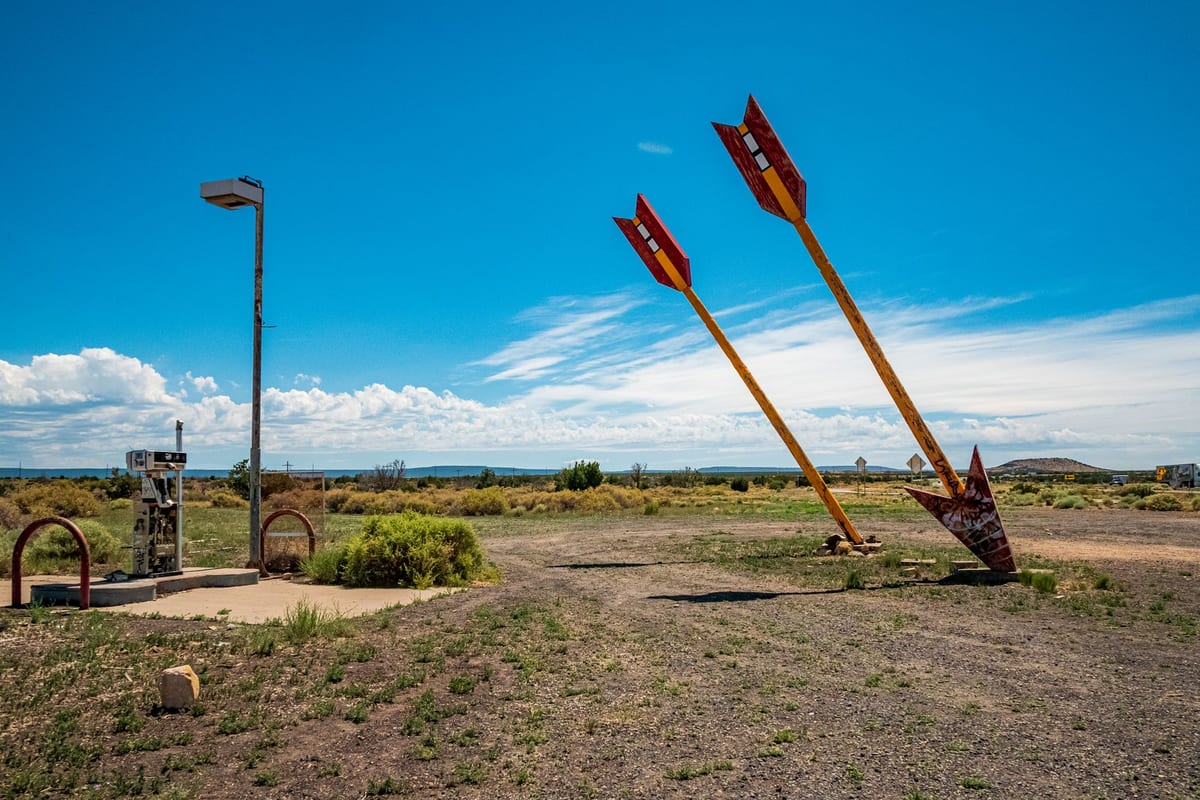 Photo by Strange Happenings · CC Pexels License undefined
Which five roadside oddities make the best 2–5 minute audio stories (and where to hear them on your route)
Five roadside stops with tight 2–5 minute audio stories, how they trigger as you pass, and how to try the web demo without a detour.
You want road-trip gold that plays before you’ve even parked
You’re rolling past a cryptic sculpture or a town’s “world’s biggest” claim and you’ve got, what, three minutes before the exit? Perfect. That window is built for a short, punchy audio story.
Here’s how to pick great roadside oddities for 2–5 minute listens, five specific stops that shine, and how the stories fire hands-free while you drive.
What makes a roadside oddity perfect for a 2–5 minute audio story?
Short drive-by audio works when the spot has a crisp narrative hook and just enough verifiable detail to land before your turnoff. Research on location-aware audio stresses matching story length to the time you’re in range and keeping the content focused—think one memorable angle plus quick setup and payoff (Springer Human-Centered Computing). In practice, the best candidates share:
- A compact hook you can say in one sentence: origin myth, wild scale, or a weird ritual (Springer Human-Centered Computing).
- One sensory cue: “look for the half-buried cars on your left,” or “notice the tilt when you step inside.”
- A few concrete facts you can deliver cleanly—names, dates, distances—no rabbit holes.
Five roadside oddities with tight, entertaining 2–5 minute stories
Each one below includes a suggested angle, an estimated listen time, and whether you can enjoy it without leaving the highway.
1) World’s Largest Ball of Twine — Cawker City, KS (2–3 minutes)
- Angle: A farmer’s tidy habit becomes a town tradition. Frank Stoeber started it in 1953, and the community still holds a “Twine‑A‑Thon” where people add to the mass (Roadside America — Ball of Twine).
- What to listen for: The origin line (“one man’s spool, the town’s pride”), a quick stat or two if you’re paused, and the participatory bit—locals maintaining it.
- Myth vs. fact beat: Acknowledge the rival “largest twine” claims; stick to the Cawker City timeline (Roadside America — Ball of Twine).
- No-detour listen? Yes. It’s a compact story that lands before you have to decide to exit.
2) Cadillac Ranch — Amarillo, TX (2–4 minutes)
- Angle: An art prank turned pilgrimage. Ant Farm, a 1960s/70s artist collective, half-buried tailfinned Cadillacs in a line; visitors spray-paint them daily (Roadside America — Cadillac Ranch).
- Sensory cue: You can often spot the neon graffiti from I‑40; the narration can literally tell you, “It’s that fence line of up-tilted Cadillacs on your left.”
- Ritual: The spray-can tradition is the heartbeat of the piece—make it the closer (Roadside America — Cadillac Ranch).
- No-detour listen? Yes. The whole 2–4 minutes works as a fly-by tease, with a “pull off if you want to add a layer of paint.”
3) Fremont Troll — Seattle, WA (2–3 minutes)
- Angle: One big character, one clean origin. The troll sculpture under the Aurora Bridge landed in 1990 and instantly became a neighborhood mascot and photo magnet (Roadside America — Fremont Troll).
- Sensory cue: “Imagine a stone hand palming a real VW.” That image sticks even if you’re just passing by.
- Culture beat: Toss in the occasional prank lore to humanize it (Roadside America — Fremont Troll).
- No-detour listen? Yes. It’s a neat 2–3 minute character portrait.
4) The Mystery Spot — Santa Cruz, CA (3–5 minutes)
- Angle: A tilt-house that scrambles your senses. The official tour frames it as a “gravitational anomaly”; the explainer can cover the perceptual tricks and the showman tradition in one beat (Mystery Spot — Official Site).
- Sensory cue: Lines that direct you to notice apparent leaning and size shifts when someone stands “uphill.”
- Myth vs. fact: Contrast the attraction’s claims with a short “how slant and forced perspective fool your inner ear,” then don’t over-lecture—this is still roadside wonder (Mystery Spot — Official Site).
- No-detour listen? Yes for the story; the full effect is on-site, but a 3–5 minute piece sets the hook and tells you what to watch for if you return.
5) Coral Castle — Homestead, FL (3–5 minutes)
- Angle: One man’s heartbreak builds a myth. Edward Leedskalnin, working largely alone at night, carved and moved massive coral blocks, spawning legends about “secret methods” (Roadside America — Coral Castle).
- Sensory cue: The gate cut from a single stone block and balanced so it spins—an image you can picture from the road.
- Myth vs. fact: Place the romance and the plausible engineering side by side, then resolve cleanly in under two minutes (Roadside America — Coral Castle).
- No-detour listen? Yes. The narrative stands alone; the invite is to tour later if you’re curious.
How the story actually triggers while you drive
The whole point of location-aware audio is not making the driver poke at a screen. The app reads facts out loud as you pass points of interest so eyes stay on the road.
Under the hood, location-aware apps commonly set up geofences—software “rings” tied to GPS coordinates—and start audio when you enter or dwell in a region. Native platforms ship region monitoring: Android’s Geofencing API supports enter/exit/dwell events and background permission flows (Android Geofencing API). iOS provides circular region monitoring via Core Location; practitioners try to keep geofences comfortably big because tiny radii are flaky. Developer reports suggest anything under about 50 m is unreliable, with 150 m a safer practical floor (Stack Overflow — iOS geofence reliability).
For highway storytelling, that means:
- “Approach rings” begin a 2–5 minute story just before you draw even with the landmark, so it lands on time while moving 60–75 mph.
- No detour required. You can place geofences along the road corridor so the story fires from the lane you’re in (Google Maps NavSDK — client-side geofences).
- On phones, background limits and batching can delay geofence events, especially on newer Android versions, so designers use larger rings and add on-device distance checks to stay precise (Android Geofencing API).
Can you listen without detouring?
Yes—if your route clips the geofence ring, the story plays as you pass. That’s the entire point of corridor geofences and approach triggers (Google Maps NavSDK — client-side geofences).
Two setup notes to make this work smoothly:
- Grant location permission. Apps must request it clearly; browsers also require an explicit “allow” before using your position (W3C Permissions & Trust UX).
- Start audio with a tap in the browser. Mobile browsers often block autoplay of audible media until you interact, so demos show a play button first (MDN — Autoplay policy). After that tap, narration can continue hands‑free while you drive.
Where to try this on a map (without guessing)
Every road has a story. LoreRoad tells it. It surfaces location-aware facts about history, landmarks, roadside oddities, food, and local legends and reads them aloud as you pass them. If you’re new and just want to see pins, timing, and narration in action, load the free New York‑to‑California demo trip in your browser. Because browsers gate autoplay, expect a visible play control and a location permission prompt before the demo will speak (MDN — Autoplay policy; W3C Permissions & Trust UX).
In the app, content appears along your route and plays automatically once you’ve allowed location—no need to hunt while you’re driving. If you want a peek before rolling, skim the quick explainers here:
- How location-triggered stories work: Facts
- What’s ahead on your line: Map
- Meet the voice that answers, “What’s interesting near me?”: Lore
How we time each stop to a 2–5 minute window
Short audio isn’t a summary; it’s a single, satisfying beat that can begin the moment you come into range. The research-backed playbook is: set the scene for 20–40 seconds, tell one vivid thing (origin, ritual, myth‑vs‑fact, or a sensory snapshot), and land one concrete takeaway—all inside the approach ring (Springer Human-Centered Computing). That shape keeps the story crisp even if you’re not parking.
Planning a test drive
Want the full experience with narration, games for the passengers, and a trip map that logs the states you’ve snagged? LoreRoad is your witty road-trip co-pilot. Basic plan is $3.99/mo and includes unlimited facts, Lore, the full game library, and lifetime/per‑trip state maps. Family plan is $9.99/mo and adds multiplayer party games, kid mode with a content filter, and an auto‑scrapbook trip journal with per‑member stats. Subscriptions are billed through the App Store; cancel anytime. If you’re still window‑shopping, start with the free browser demo and then check Pricing.
Next step: queue up a route that passes one of the five spots above, enable audio, and let the first approach ring roll you right into a 3‑minute story.
Common questions
What makes a roadside oddity work for a 2–5 minute drive-by story?
One clean hook (origin, ritual, sensory moment), a few verifiable facts, and a clear visual or auditory cue you can describe quickly. Short-form, location-aware audio performs best when story length matches your time in range (Springer Human-Centered Computing).
Will these stories play without me taking an exit?
Yes. Corridor geofences and approach rings along the highway trigger narration as you pass the landmark—no detour required (Google Maps NavSDK — client-side geofences).
Why doesn’t the web demo speak until I tap something?
Browsers often block audible autoplay. You’ll see a play control; tap it once and grant location permission, then narration can continue hands‑free (MDN — Autoplay policy; W3C Permissions & Trust UX).
How close do I need to be for a story to trigger reliably?
Practitioners avoid tiny geofences. iOS region monitoring under ~50 m is unreliable; ~150 m is a safer floor for dependable enter events in real-world reports (Stack Overflow — iOS geofence reliability).
LoreRoad tells you the history behind every mile — surfaced as you reach it and read aloud, so the driver never looks down.
Get the appSources (11)
- Hierarchical geofencing for location-aware generative audio tours (Springer)
- World's Largest Ball of Twine, Cawker City, Kansas (RoadsideAmerica)
- Cadillac Ranch (RoadsideAmerica)
- The Fremont Troll, Seattle (RoadsideAmerica)
- The Mystery Spot (official site)
- Coral Castle (RoadsideAmerica)
- Create and monitor geofences (Android Developers)
- Handling Trust and Permissions in Web Applications (W3C)
- Autoplay guide for media and Web Audio APIs (MDN)
- Client-side geofencing with Nav SDK (Google Developers)
- Stack Overflow discussion referencing CoreLocation practical limits